E-commerce in the USA - How is the world’s largest online market growing?
The United States of America is home to the largest e-commerce market in the world, which continues to grow dynamically in 2026. Online sales are becoming an integral part of Americans’ daily lives, with mobile shopping, personalized offers, and seasonal events such as Black Friday and Cyber Monday significantly influencing consumer behavior.
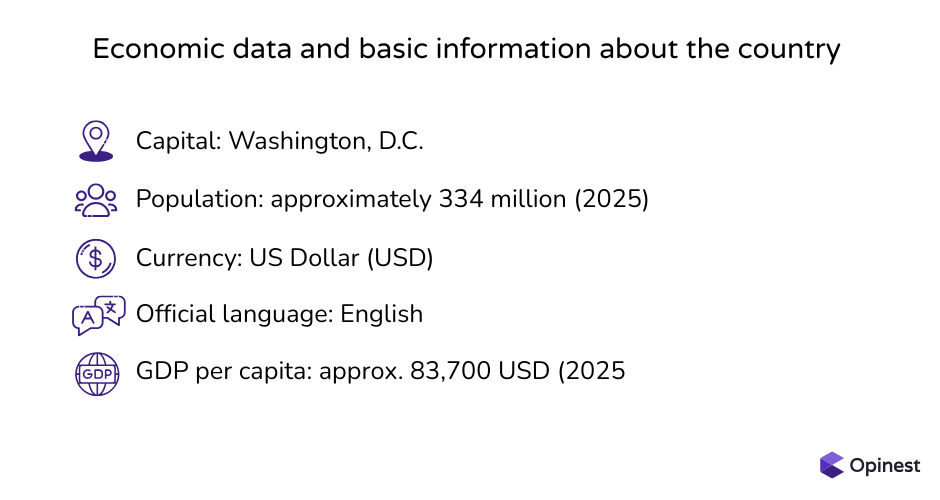
The United States of America (USA) is one of the most developed and largest economies in the world. Its economic strength, diverse market, and technological innovation make it a key player in the global economy.
Size of the e-commerce market in the USA
The American e-commerce market is the largest in the world, and its importance in retail continues to grow. With the rapid development of technology and changing consumer purchasing behavior, online sales have become an inseparable part of daily life.
According to a report by Mordor Intelligence, the American e-commerce market is estimated to reach approximately 1,381.6 billion USD in 2026, representing an increase compared to 2025 (1,250 billion USD) and continuing the expansive trend of online sales in the USA.
The share of e-commerce in US retail sales is steadily increasing, with estimates suggesting that this share will reach around 18% in 2026.
M-commerce
Mobile devices are fundamentally changing the way people shop online, and this trend continues in 2026. The share of mobile purchases in the total e-commerce market in 2026 is expected to rise to approximately 60% of all online sales, meaning mobile devices are becoming an even more dominant channel for online shopping.
These figures indicate that mobile shopping in the USA will be even more important in 2026 than before and will account for the majority of online transactions. This growth is closely linked to the increasing number of smartphone users, higher frequency of shopping directly via mobile apps, and optimization of mobile websites for simple and fast purchases.

What influences the market?
How seasonal events and holidays shape the e-commerce market in the USA
Companies that can plan ahead, leverage modern technologies, and target the right offers can maximize sales and gain a competitive advantage. Black Friday, Cyber Monday, holidays, festive seasons, and seasonal sales are not just opportunities for sales – they are a strategic tool for growing e-commerce business.
1. Black Friday and Cyber Monday
- Total online sales during Cyber Monday 2025 reached approximately 14.25 billion USD, representing a year-on-year increase of approximately 7.1% compared to 2024. Cyber Monday remains the biggest day of the year for online shopping in the USA.
- During peak hours (8:00–10:00 PM EST), customers in the USA spent around 16 million USD per minute.
2. Holiday Season
- In 2025, during the holiday season (from November 1 to December 31), online sales in the USA reached a record approximately 257.8 billion USD, representing a strong share of the total annual e-commerce turnover.
- Christmas, Hanukkah, and New Year are the most important periods, but smaller holidays such as Valentine’s Day, Mother’s Day, and Halloween also significantly stimulate sales.
3. Back-to-School Season
- From July to September, sales of school supplies, clothing, and electronics increase.
- This trend is primarily supported by e-shops targeting young customers and parents.
- Events such as the extended Amazon Prime Day, which in July 2025 brought a significant increase in school supply sales, further drive this growth.
4. Summer and Seasonal Sales
- Summer sales and holiday promotions (Summer Sale, Memorial Day, Labor Day) encourage the purchase of seasonal clothing, sports equipment, and outdoor gear.
- These periods often also serve to clear inventory before the new season.
5. Trends and company strategies
- Pre-sale and “Early Access” offers: Many brands allow loyal customers to shop before others, thereby increasing sales and building loyalty.
- Influencers and social media: Using influencers before Black Friday and holidays significantly boosts online sales.
- Personalization: Targeted discounts and product recommendations during seasonal events stimulate impulse purchases.

Growth factors – past and future
In the past, growth was driven by the expansion of the internet and secure payment systems, the convenience of online shopping, and efficient logistics. Dominant players like Amazon and Walmart set standards for pricing, delivery, and customer service, which stimulated competition and innovation.
The future of e-commerce will be driven by artificial intelligence, shopping personalization, and virtual reality, which enhance the customer experience. Mobile shopping and social media will continue to grow, with m-commerce potentially accounting for more than 75% of online sales by 2028. Consumers will also increasingly prefer sustainable products and environmentally friendly delivery, leading to the growth of so-called “green e-commerce.”
Projected e-commerce growth until 2029
According to a forecast by the analytical firm Forrester, online sales in the USA are expected to rise from approximately 1.2 trillion USD in 2024 to about 1.8 trillion USD in 2029, with the share of e-commerce in total retail sales increasing from around 23.4% in 2024 to approximately 29.3% in 2029.
Another analytical source reports that the American e-commerce market was valued at approximately 514.7 billion USD in 2019 and is projected to reach approximately 1.84 trillion USD by 2029, representing more than a threefold increase over ten years.

Largest e-commerce players in the USA
The American e-commerce market is dominated by several key players. Amazon leads with approximately a 37.6% share, thanks to its wide assortment, fast delivery, and personalized recommendations. Walmart has around a 6.4% share, combining online sales with extensive brick-and-mortar stores and competitive pricing.
eBay (4–5%) specializes in auctions and collectible products. Target (2–3%) combines quality assortment with online/offline sales. Etsy (1–2%) is known for handmade and unique products.
Shopify enables thousands of local sellers to operate their own e-shops and compete with large platforms. Wayfair specializes in furniture and home goods and is rapidly gaining market share among domestic consumers.
Chewy, focused on pet products, and Zappos, which specializes in online shoe and fashion sales with excellent customer support, are also growing.
These companies benefit from a narrow focus, specialized products, and customer loyalty, which allow them to grow even in a competitive environment.
Consumer behavior in the USA
Consumers are digitally savvy and have high expectations for online shopping. They prefer fast and convenient purchases, with more than half of online transactions taking place via mobile devices. They expect a simple shopping process, clear websites, and fast delivery. Express delivery and services such as “next-day delivery” strongly influence their decision on where to shop. Americans also value loyalty programs and subscription services that provide discounts, exclusive content, or faster delivery.
The average frequency of online shopping in the USA varies by age and type of product. Most Americans shop online at least once a month, while younger generations, such as Millennials aged 24–39 and Generation Z (18–23), shop more frequently, often once or twice a week, especially for clothing, electronics, or consumer goods.
Daily or very frequent purchases are typical for customers using subscription services, for example for groceries, cosmetics, or pet products, where orders are placed repeatedly and automatically.
Growth of the BNPL (Buy Now, Pay Later) market
- 2023: The BNPL market in the USA reached a payment volume of 71.9 billion USD, representing a year-on-year increase of 19.7%.
- 2024: The number of BNPL users in the USA rose to 86.5 million, an increase of 6.9% compared to the previous year.
- 2025: The BNPL market in the USA is expected to reach 97.25 billion USD, representing a year-on-year increase of 20.4%.
- 2027: The BNPL market in the USA is expected to reach 124.82 billion USD, indicating continued growth in the coming years.
Responsibilities of e-commerce platforms
Online shopping is a huge business in the United States. Platforms like Amazon, eBay, Etsy, and Shopify facilitate millions of transactions daily between sellers and customers. But with great power comes great responsibility, and US laws clearly define what these platforms must do to protect consumers and the market.
Who is responsible for products?
In most cases, the platform is merely an intermediary, providing a place where the seller meets the customer. Responsibility for product quality, safety, or authenticity usually lies with the seller.
However, it is not always that simple. If a platform:
- sells, stores, or distributes the product itself (e.g., “Fulfilled by Amazon”),
- modifies the product description, price, or promotion,
- or actively manages the seller’s marketing,
it can be considered co-responsible under US courts. In practice, this means that if a product causes harm, the customer can sue the platform itself.
Consumer protection under FTC supervision
The US Federal Trade Commission (FTC) ensures that online commerce is fair. Platforms must therefore ensure:
- truthful and transparent product information
- clear prices and fees
- the possibility of returning goods according to applicable rules
- no misleading reviews or marketing tricks
They must also protect customers’ privacy and sensitive data according to laws such as COPPA (for children) and various state privacy regulations.
Tax obligations: after the Wayfair decision, nothing is the same
Online platforms without a physical presence in a given state must collect and remit state sales tax. Most states have adopted so-called Marketplace Facilitator Laws, which require platforms to handle tax collection on behalf of individual sellers. For the buyer, nothing changes - the tax is simply included in the cart - but responsibility shifts to the platform.
Data protection and cybersecurity
Although the USA does not have a single federal data protection law like the EU, some states—such as California with its CCPA (California Consumer Privacy Act)—have implemented strict regulations.
E-commerce platforms must therefore:
- inform customers how their data is processed
- allow them to request data deletion
- protect payment information according to PCI DSS standards (security requirements for account data)
Data breaches or misuse of personal information can lead to multi-million-dollar fines and reputational damage.
Intellectual property and fighting counterfeits
In the online world, counterfeit products and stolen content are a major problem. The Digital Millennium Copyright Act (DMCA) provides platforms with “safe harbor” protection - but only if they have an effective system for reporting and quickly removing copyright infringements.
Amazon, eBay, and Etsy operate special programs for reporting trademark and copyright violations to prevent the sale of fakes.
Seller verification and transparency
Platforms are increasingly responsible for who sells on them. They must verify sellers’ identities, publish their contact information, and allow customers to file complaints.
The goal is to reduce the number of anonymous sellers who might sell illegal or unsafe products.
Reviews under FTC supervision
Platforms must actively monitor whether reviews are paid, automatically generated, or misleading. This strengthens customer trust in ratings and overall transparency.
The responsibilities of e-commerce platforms in the USA are continuously expanding. From originally “neutral intermediaries,” they are gradually becoming active players who must guarantee fairness, safety, and transparency in the digital market.
And since many of these platforms also operate in Europe, they must also comply with European regulations, such as the Digital Services Act (DSA).
Result: Online commerce is transforming into a highly regulated environment where trust and responsibility go hand in hand.

Current trends in e-commerce
Personalization and artificial intelligence
One of the biggest shifts is the rise of artificial intelligence and the personalization of the shopping experience. Tools like ChatGPT, intelligent chatbots, and recommendation algorithms can now analyze customer behavior in real time and tailor offers to their needs.
This means that instead of endlessly browsing products, the customer receives relevant recommendations—whether it’s products they are likely to like or special offers that match their preferences.
Flexible payment options
Another trend gaining huge popularity is flexible payment solutions. “Buy now, pay later” (BNPL) services, such as Klarna, Afterpay, or Affirm, allow customers to shop immediately and pay later in several interest-free installments.
Growth of B2B e-commerce
While the B2C market is already well established, the B2B e-commerce segment is experiencing enormous growth. Companies are increasingly digitalizing their purchasing processes and moving online, where they can more efficiently manage orders, pricing, and deliveries.
According to experts’ estimates, B2B e-commerce is expected to reach a value of more than 2.08 trillion USD by 2030. This growth is driven by automation, system integration, and demand for fast, transparent business solutions.
In other words, e-commerce is no longer just about consumers - it increasingly involves companies looking for more convenient and smarter ways to purchase.
As consultants, we have many years of experience in expansion – do not hesitate to contact us, we are happy to help advance your project.