You Are Not Temu. And That’s Your Advantage. What Has Changed and How to Stay in the Game
TEMU has turned e-commerce upside down — cheap, fast, and aggressive, leaving smaller players struggling to keep up. But there’s a big difference between a marketplace and a brand: Temu sells cheap, but you can sell trust, service, and a story customers will remember. Dumping prices and endless offers are the new reality — but instead of panicking, now is the time to adapt and turn this change to your advantage.

How Temu Is Changing the E-Commerce
Pressure on Prices and Margins
Temu brings products at prices that local players simply can’t compete with. With heavily subsidized pricing, it’s nearly impossible to match Temu — local businesses face higher wages, stricter regulations, and costly distribution chains. Many are therefore forced to lower margins or shift their focus toward higher-quality and niche products.
OpiTip: Build strong customer relationships and invest in your brand — these are assets no one can take away from you. When done right, your customers will reward you with loyalty and repeat purchases.
Logistics and Delivery
As prices drop, e-shops are looking for other ways to convince customers to buy from them — and logistics is one of the key battlegrounds. With Temu’s arrival, delivery times from abroad have become faster (sometimes as little as two days after ordering), pushing local e-shops to shorten their delivery windows to within 24 hours.
Although Temu still ships most of its products from abroad (and most deliveries still take over a week), the platform is testing local warehouses to get products into customers’ hands faster.
Regulations and Taxes
Another challenge is the unequal regulatory environment. Temu takes advantage of customs exemptions and VAT-free imports, while local companies must pay full taxes and comply with all legal requirements. In response, more countries are introducing import fees, and the EU itself is considering a flat €2 charge per small parcel shipped directly to consumers.
Huge Assortment vs. Specialization
Temu bets on quantity — an enormous product range. If local players try to replicate that model, they’ll fail. The real opportunity lies in transforming your business into something global giants can’t easily replicate.
Take Shein, for example: it’s a fashion powerhouse, but try finding high-quality ski apparel or top-tier outdoor equipment there. That’s where your opportunity lies — in specialization and expertise.
Product Quality and Customer Trust
With thousands of sellers on the platform, product quality can vary dramatically. Global giants often prioritize quantity over quality, which can lead to consumer frustration. Local e-shops have a unique chance to highlight customer support, authenticity, and product reliability — things that truly matter to shoppers.
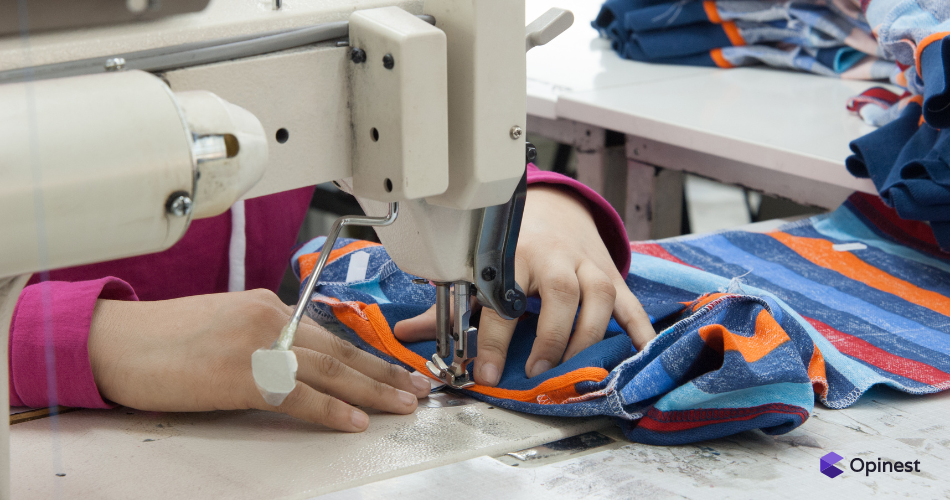
OpiTip: It’s widely known that global players like Temu, Shein, or AliExpress often face criticism for poor labor conditions in their manufacturing facilities. Communicating your ethical production standards can be a strong competitive advantage. Don’t hesitate to emphasize this difference — just make sure your messaging remains legally compliant. For example: ,,Our products are made by people, not factories. Fair working conditions and transparent production are our standard.”
Temu | Amazon | Shein | Local Players | |
| Product Range | Extremely wide – from clothing to electronics, toys, and home goods | Huge assortment – from books to electronics, groceries, and services | Clothing, accessories, beauty – ultra-fast fashion | Specialized (fashion, sports, electronics, drugstore, etc.) depending on segment |
| Pricing Strategy | Extremely low prices, discount codes | “Value for money,” not always the cheapest | Low prices, small margins, frequent discounts | Prices adapted to the local market, often higher than Temu |
| Delivery Speed | 7–20 days from abroad | 1–3 days (Amazon Prime logistics) | 7–14 days from abroad | 1–3 days from local warehouses, express delivery within 24 hours |
| Shipping & Logistics | Cheap or free shipping, frequent promos | Amazon Prime = free shipping with monthly subscription | International shipping, free shipping above a certain value | Local carriers, verified partners, free shipping above a certain order value |
| Customer Support | Online/chatbot, often complicated | Professional, fast (localized) | Online/chat in English, limited assistance | Local support in native language, phone and email available |
| Marketing | Massive promotions, app-only discounts | On-site recommendations, email, personalization | Social media, influencer marketing | Personalized campaigns, local content, focus on trust |
| Returns & Complaints | Complicated, lengthy, at customer’s expense | Easy, prepaid returns (especially for Prime) | Complicated, often at customer’s expense | Simple, local, often free or low-cost returns |
What Has Temu Taught Customers?
A New Perspective on European E-Shops
Customers are no longer comparing only local retailers — they’re benchmarking against global platforms. For European e-shops, this means a major challenge: proving that a higher price equals higher value. That value must translate into product quality, safety guarantees, local production, and personalized service — things large marketplaces simply can’t deliver.
Focus on Differentiation
Local businesses can’t win a price war. Instead, they should focus on quality, brand strength, and customer service. Fast complaint handling, extended warranties, and a personal approach are benefits that Temu can’t replicate.
Building Fast Logistics
Investing in local warehouses or logistics partnerships can reduce delivery times and meet customer expectations. Reliable and quick delivery often outweighs a slightly lower price.
Pressure for Fair Rules
Local trade associations and retailers are increasingly calling on governments to close tax and customs loopholes and protect consumers from unsafe products. Equal rules for all players help level the competitive playing field.
Using Data and Agility
Local e-shops must learn to leverage data in the same way global platforms do. Fast product testing, demand prediction, and flexible marketing campaigns can help them respond to trends without unnecessary delays.
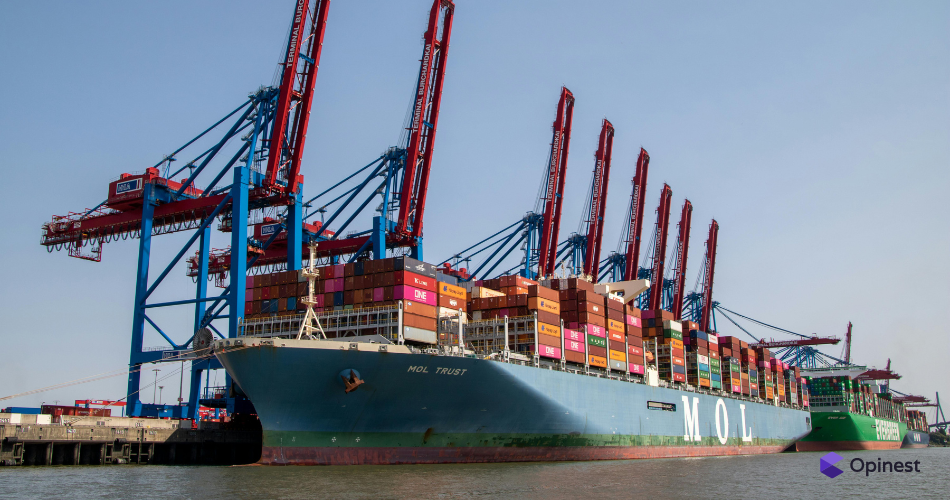
Improve Where Temu Can’t Reach
Where local e-shops truly have the upper hand is in their proximity to customers. Physical stores, pickup points, and locally targeted campaigns can build trust and provide a sense of comfort that global giants simply can’t deliver.
Customer support is another strong advantage — personal interaction, quick responses, and a human touch often become the deciding factors for why customers choose to buy locally instead of abroad. Equally important is building credibility. Transparent terms, authentic reviews, and a strong local identity are key elements that foster customer loyalty.
OpiTip: If your customers are 100% satisfied with your services and products, trust us — they will leave positive reviews. But if you want to gently increase the number of positive ratings, send a follow-up email with a simple review link. The fewer clicks required, the higher the chance they’ll actually submit their feedback.
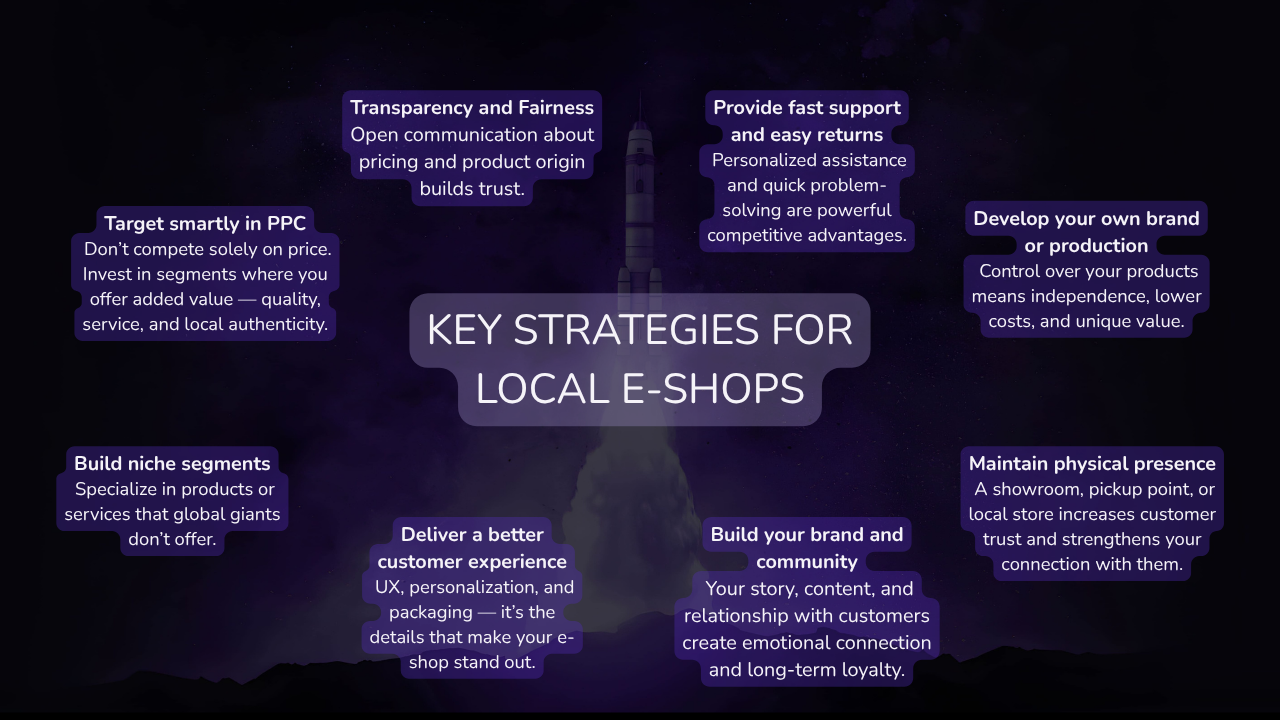
OpiTip: It’s important to realize that there are areas where competing with global giants simply isn’t possible. Whether it’s covering thousands of product categories or engaging in price wars, local sellers can’t win on those terms. One of the winning strategies in this battle lies in niche products and in-house production — giving you greater control and helping reduce costs that can then be reinvested into value for your customers.
The rise of Temu has taught everyone a key lesson: you can’t ignore global players — but you can learn from them while focusing on what they’ll never have — local presence and real customer support. As consultants, we can help you strengthen your e-shop through a comprehensive business strategy. Book an online consultation with us — and let’s turn your business into a powerful e-commerce player.